

The Place Nobody Talks About
Every great Ethiopian coffee passed through one, yet very few ever notice it or know what it is.
Some of you already know what a washing station is. Good for you. The rest of you have been nodding along every time someone mentions it. No judgment. That is exactly why we are here. 😉
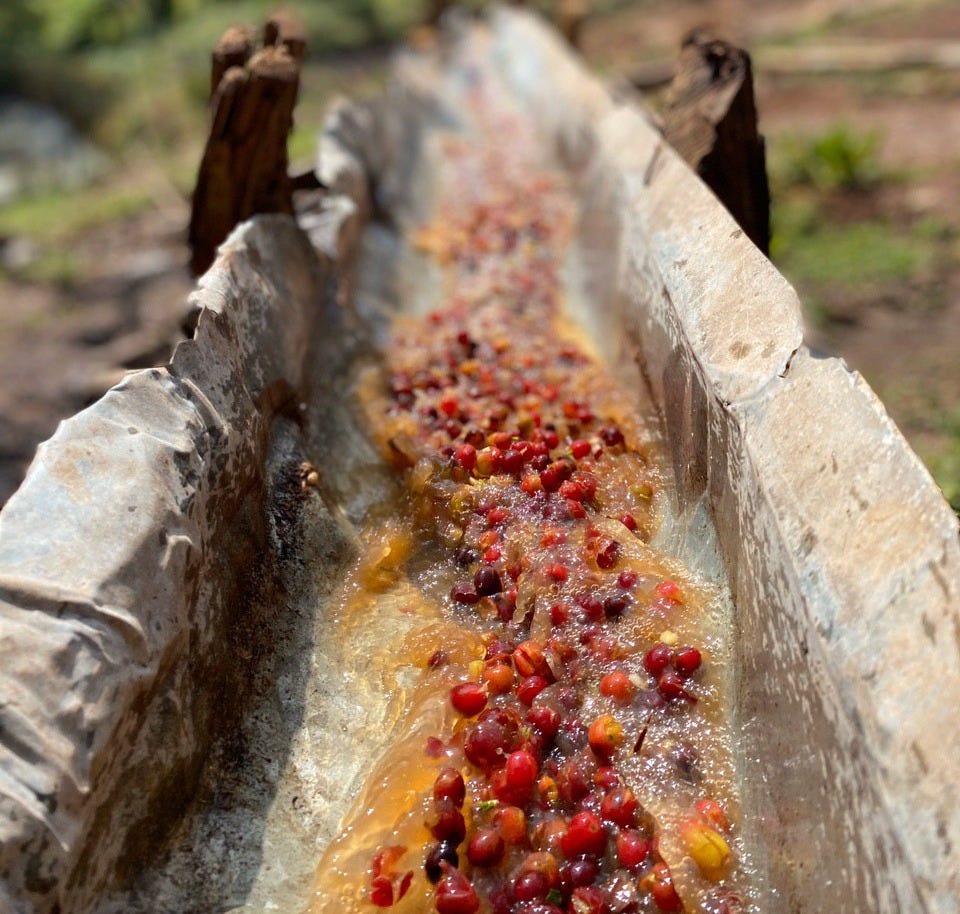
Pulp and water rushing through a concrete channel. The skin is gone, the color is still everything.
What is a washing station?
Most people picture coffee starting on a farm. Trees, red cherries, a farmer with a basket. That image is real, but there is a chapter between the farm and your cup that almost nobody talks about.
It starts with the pick.
Every cherry is harvested by hand. No machines, no shortcuts. Just trained pickers moving through the trees, choosing by color. An even, medium to rich red is what they are looking for. That specific shade is not aesthetic preference. It is the difference between a sweet, clean cup and something that tastes like wet grass or, in the worst cases, something nobody wants to talk about.
Pick too early and you get green, underdeveloped fruit, low in sugar, light in weight, with a dry, astringent quality that no amount of roasting can fix.
Pick too late and the fruit goes dark, overripe, producing what the industry quietly calls sours or stinkers. The name is accurate.😂
Get it right, and ripe fruit yields something clean and sweet, with all the potential still intact.
That potential then travels, sometimes on foot, by mule, or motorbike, to a centralized facility nearby.
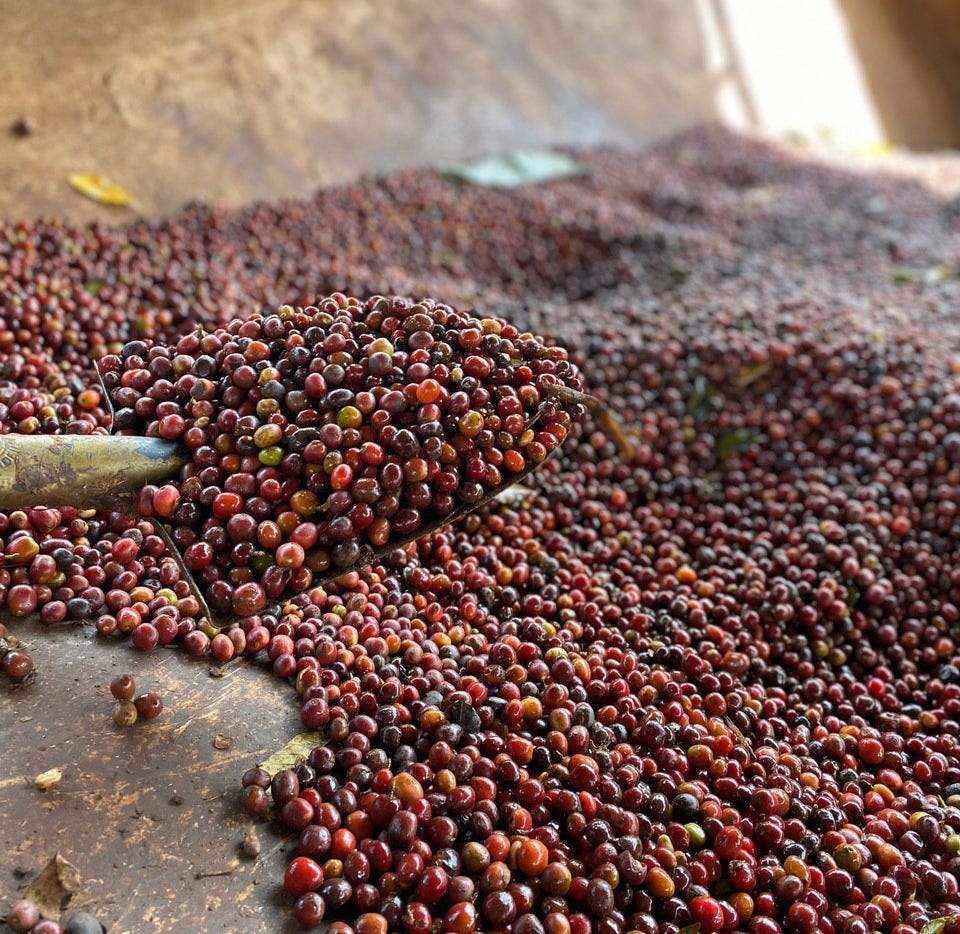
Most smallholder farmers work small plots without their own processing equipment, so when harvest comes, this is where they bring everything. That facility is the washing station, also called a wet mill. It is where the fruit becomes coffee.
Wet processing arrived in the 1950s, and today there are an estimated 2,500 to 3,000 active stations across the country, most of them concentrated in the south and west: Yirgacheffe, Guji, Sidamo, Jimma-Limu, Kaffa, and Wellega.
Some are run by cooperatives, some by private operators, some by exporters. What they all share is the same job: taking freshly harvested cherry and turning it, carefully and quickly, into something a roaster on the other side of the world will fall in love with.
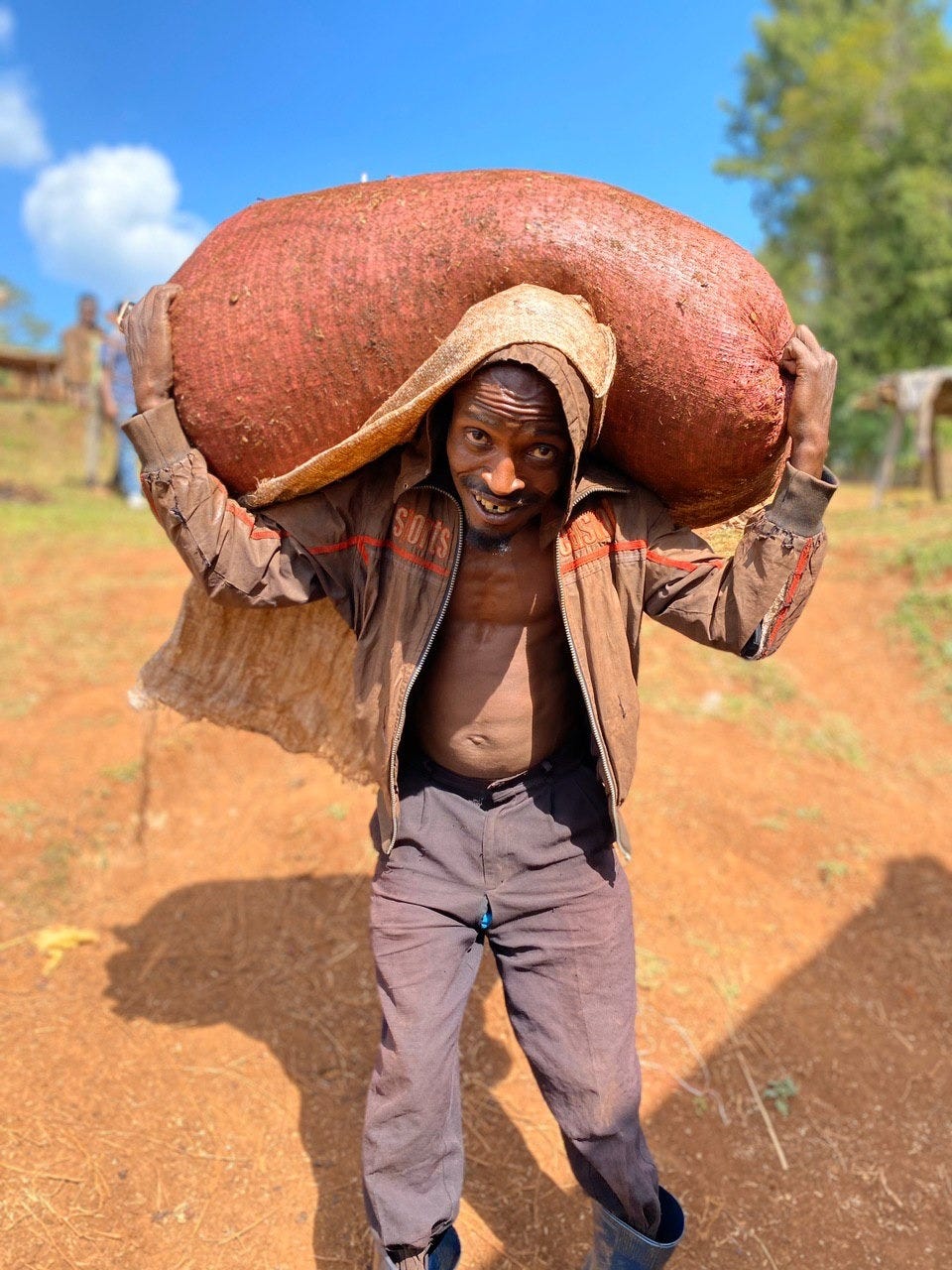
The cherry has to arrive the same day
That is not a suggestion.
Fresh cherry deteriorates fast once it leaves the tree, which is why washing stations sit close to farming communities, usually within five to ten kilometers. Coffee cherries are many wonderful things, but patient is not one of them.
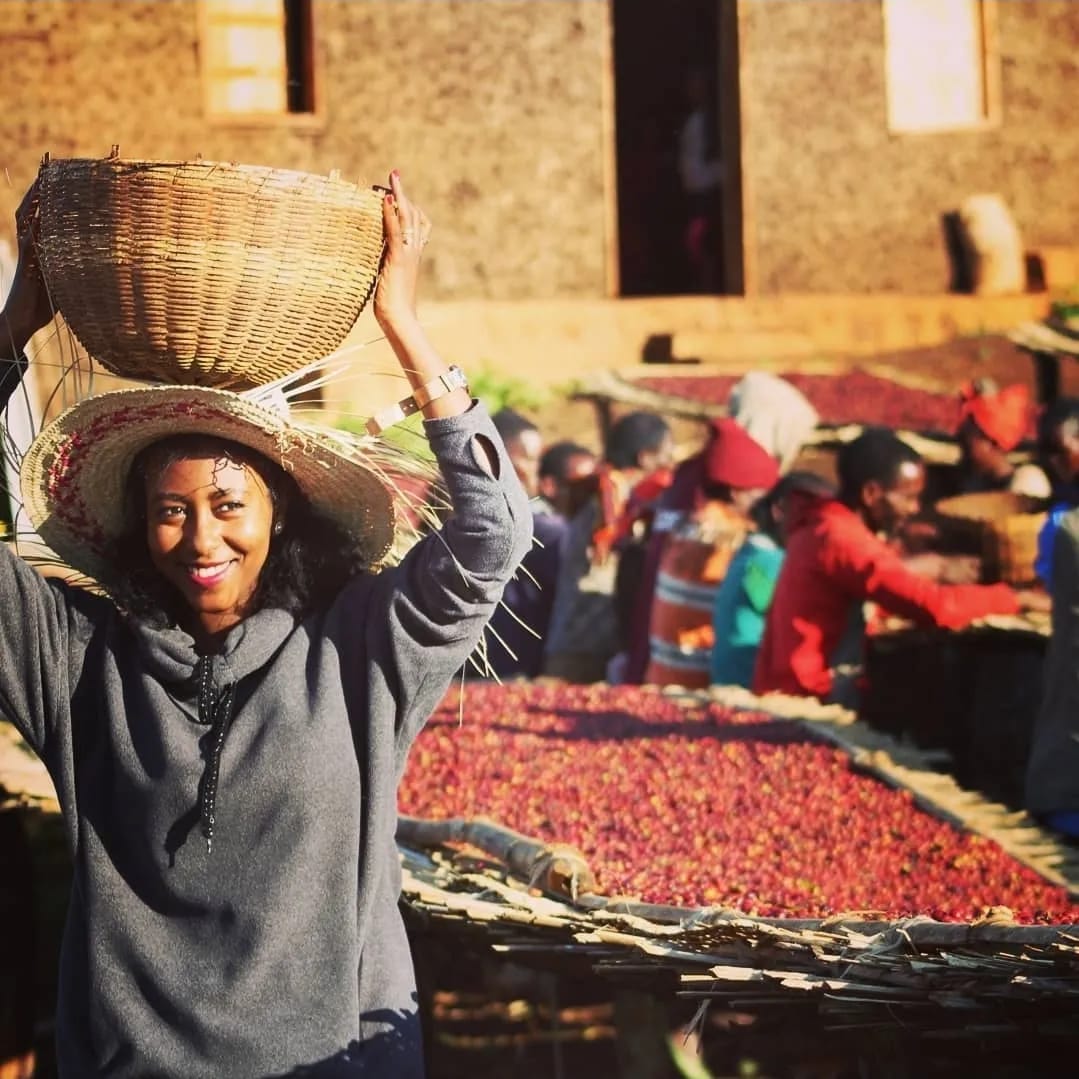
This is also why harvest season at a washing station feels so alive. Hundreds of farmers arrive throughout the day with freshly picked cherry. Cherries are weighed, water runs constantly through the channels, and workers move quickly from one task to the next. It is one of the most human places in the entire coffee supply chain.
Once the cherry arrives, there is no time for a coffee break. The sorting begins immediately.
Workers remove anything that does not belong: unripe green fruit, overripe dark cherries, leaves, sticks, and the occasional surprise nature decides to throw into the harvest. Then the cherry moves into float tanks.
This is where coffee gets a very simple swimming test.🏊🏾
Healthy, dense cherries sink. Defective cherries float. The floaters are skimmed off, and only the cherries that pass continue their journey.
So far, the cherry has survived weighing, sorting, and an unexpected swimming exam.🎖️
Next comes pulping, fermentation, and washing. But that is a story for next time.
Why it matters
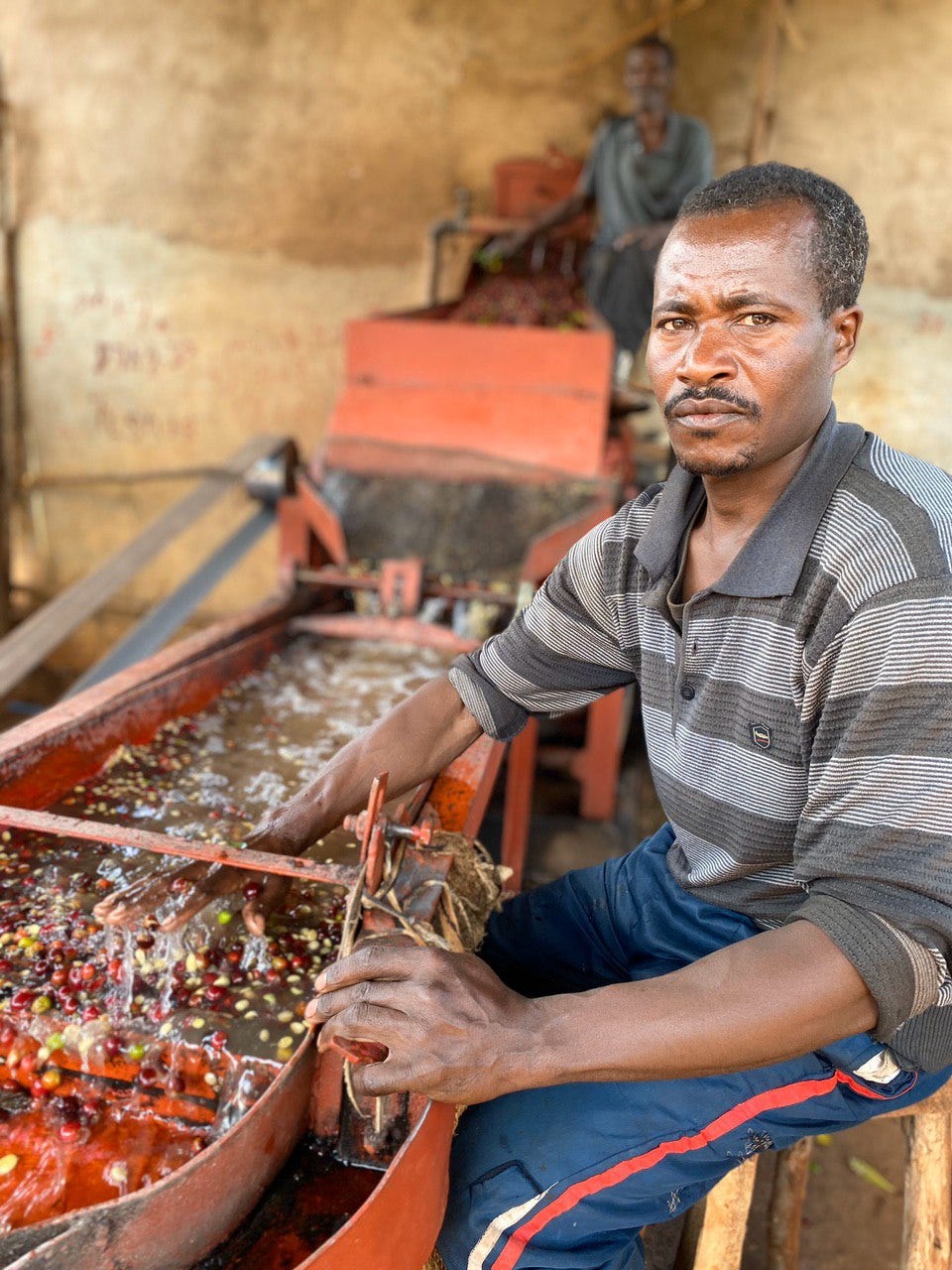
The washing station is where much of the flavor of Ethiopian washed coffee is built.
The florals, the bright citrus, the jasmine and bergamot that define a great Yirgacheffe or Guji do not simply appear one day and decide to be delicious. They are shaped by decisions made right here.
Fermentation time. Water quality. Drying discipline. Sorting precision.
Every step matters.
A well-run station can take ordinary cherry and produce an exceptional cup. A poorly managed one can do the opposite with extraordinary fruit. Coffee, like most things in life, benefits from a little attention to detail.
Compared to naturals, where the whole cherry dries intact and flavors often lean fruity and winey, washed coffees tend to be cleaner and more delicate. They usually have a lighter body, brighter acidity, and a more transparent flavor profile.
“Know someone who needs this? Forward it. You would be doing them a favor.”😉
That transparency is exactly the point.
A washed coffee has nowhere to hide. If the cherry is excellent, you taste it. If the processing is excellent, you taste that too. It allows the origin to speak clearly, which is why regions known for their washed lots continue to anchor Ethiopia’s position in the global specialty coffee market.
And yet, the washing station rarely gets the spotlight.
It does not appear on the front of the bag. It rarely earns a mention in the tasting notes. No one is posting glamour shots of float tanks on social media.
…………….But it is where most of what you love about Ethiopian coffee is decided.That feels worth knowing.
The cherry made it this far. Next time, we find out what happens when things get a little messy.😊

You came for coffee. You stayed for float tanks and swimming exams. We respect that. See you next time. 😊