
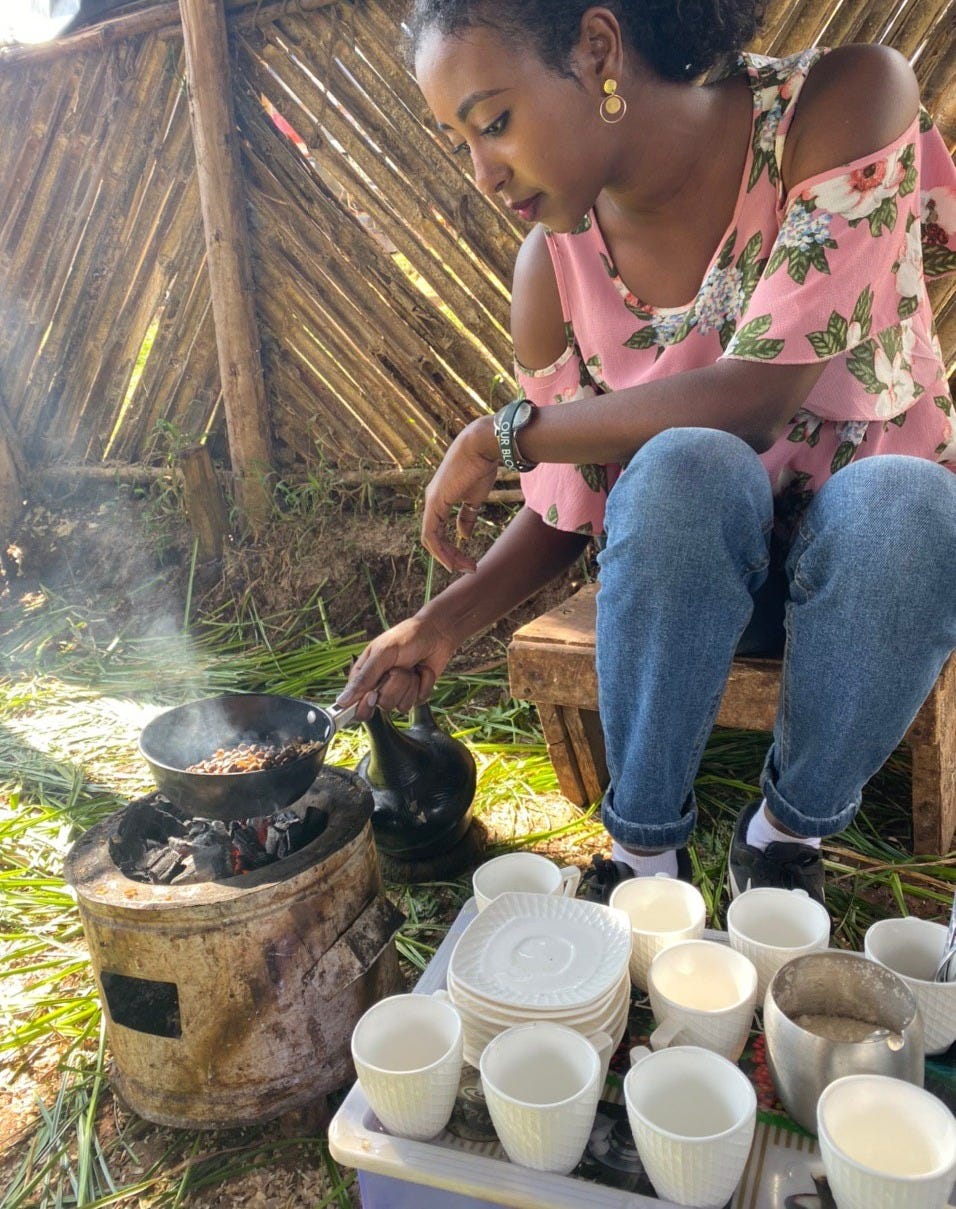
Mankeshkesha (ማንከሽከሻ) – A small, round shaped metal pan used specifically for roasting green coffee beans over charcoal.
In Ethiopia, coffee is a culture, not just a beverage. It is a ritual, a rhythm, a gathering. It is a daily ceremony where time slows down and life unfolds cup by cup.
Waking Up to the Sound of Roasting Beans
I never needed an alarm clock growing up like any other Ethiopian kid. My mornings began with the sound of green coffee beans shaking inside a metal pan called Mankeshkesha or Biret Mitad1. That soft, steady clatter, beans dancing against heat, was my mother’s way of saying wake up, the day has begun.
It begins with a small handful of raw green beans placed into a pan over glowing charcoal. As the heat builds, the beans are gently tossed and turned, allowing their thin outer skins to loosen and fall away. The careful shaking keeps them from burning and ensures they roast evenly. Slowly, their color deepens from pale green to a warm brown, releasing that first crackle and the unmistakable aroma that fills the room.
In Ethiopia, this step is never skipped. Coffee is roasted fresh for every ceremony. Buying pre roasted beans for home use is uncommon because the roasting is not just preparation, it is part of the experience. Watching the beans transform, hearing them crack, and breathing in their fragrance is something everyone shares before the first cup is ever poured.
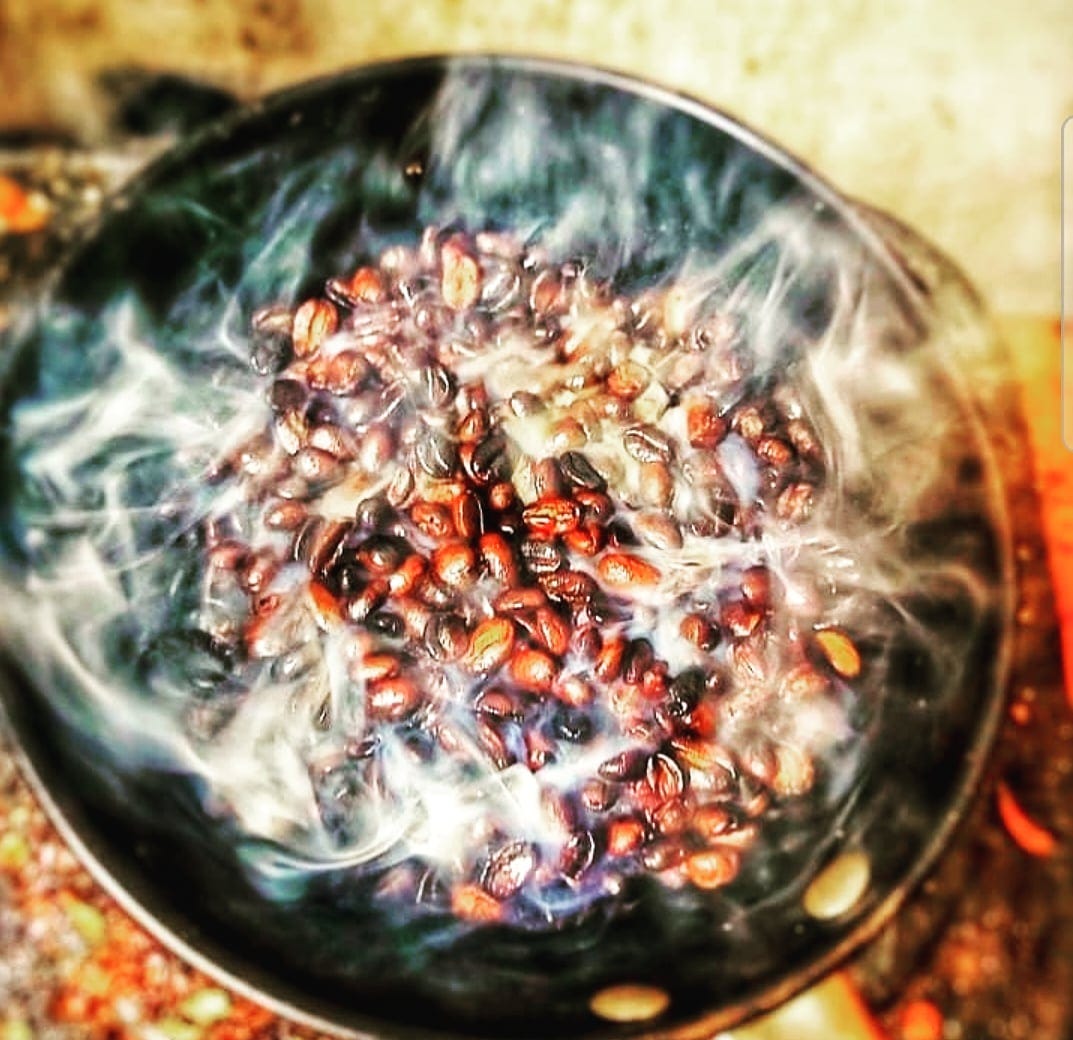
Coffee Roasted with Biret Mitad (ብረት ምጣድ)
As soon as the roast was perfected, we kids had our responsibility. My mother would carefully lift the pan of freshly roasted beans and hand it to us to carry around the room. One by one, we would present the hot, smoking beans to each guest so they could inhale the aroma. This step is not optional. It is part of the culture. Smelling the fresh roast is the first part, even before drinking. After everyone has breathed in that rich fragrance, we return the beans to cool slightly.
To grind the roasted beans, a traditional mortar and pestle is used. The heavy bowl is called a muqecha2, and the pestle, known as a zenezena3, is a wooden or metal cylinder with a blunt end. The beans are crushed rhythmically by hand into a coarse grind. The grinding task can be delegated to us children, and we take it on joyfully and proudly.
Modern electric grinders exist today, but traditional Buna does not depend on them. The ceremony keeps its character through simplicity, patience, and hands that know the rhythm.
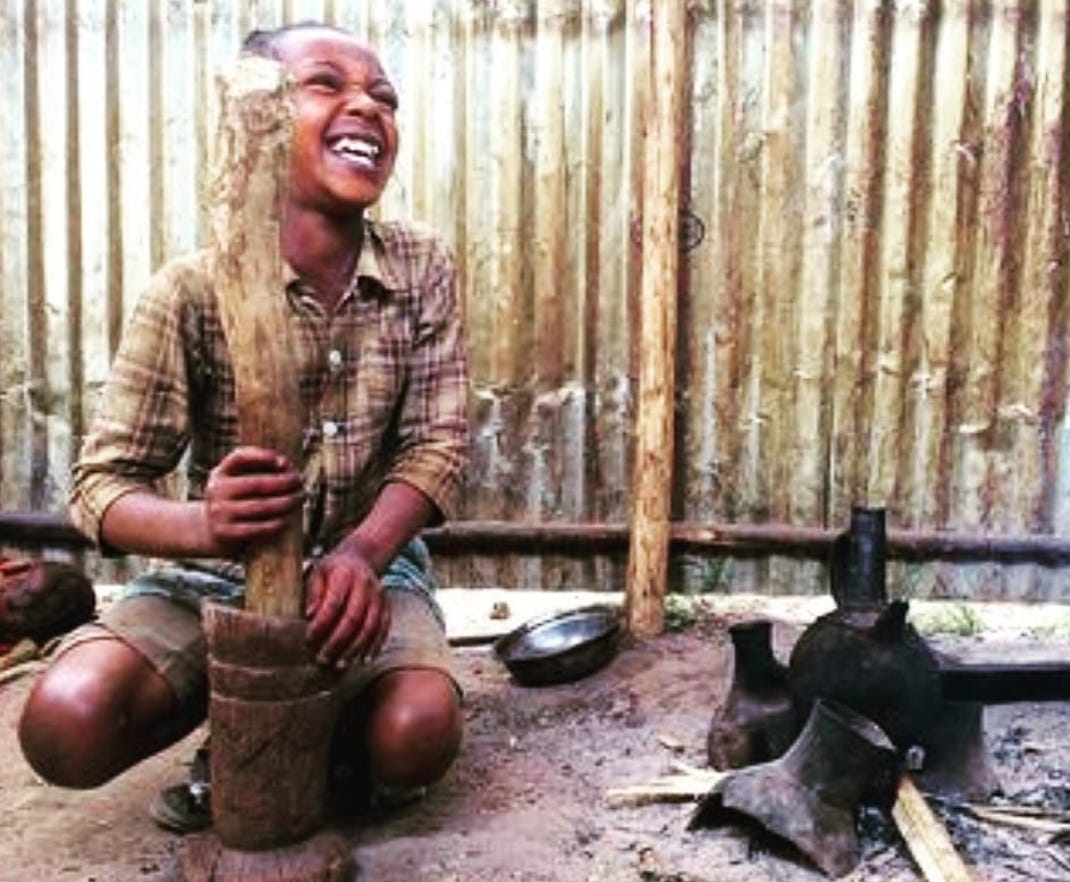
Muqecha (ሙቀጫ) – A traditional mortar used for grinding coffee or spices.
By this time, water in the Jebena is heating. The Jebena4, a hand shaped clay pot, is truly the heart of the ceremony. Carefully crafted and fired by artisans, it is designed specifically for brewing coffee. Most households use charcoal to heat it, giving the process a slow, steady warmth and a distinctive aroma.
The freshly ground coffee is added to the hot water in the Jebena, brought to a boil, then removed from the heat at just the right moment.
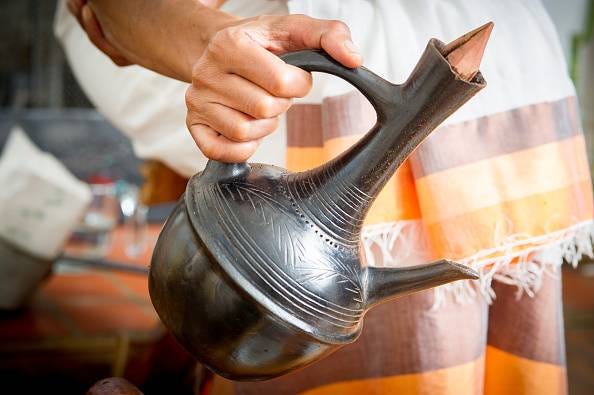
Jebena (ጀበና) – A handmade clay coffee pot used to brew traditional Ethiopian coffee.
“Stories, surprises, and coffee that wakes your senses… Pass it on!”
Serving the Coffee
Once the coffee boiled in the Jebena and was ready to serve, another duty began. The mother would pour the coffee into small cups called sini5, and we children delivered them in order of respect.
The first cup round called Abol6, which nobody misses, always goes to the grandparents, then to the eldest or the father figure, and then to each person according to age, ending with the youngest adult. By any chance, if there is a coffee shortage due to many guests, only elders and guests are served the Abol, not the host.
Children were not allowed to drink coffee, so we were given qimem shay7, a spiced tea, or we simply enjoyed the Buna Qurs8 while waiting for the second round, Tona9, to be prepared and delivered. Finally came the last round, Bereka10, the blessing that gently closed the gathering.
Coffee takes time, and in Ethiopia we give it time. Buna11 is never rushed.
The Setting: Grass and Incense
The ceremony is not only about the coffee itself but also about the environment created around it.
Fresh green grass is often spread on the floor beneath the entire setup. This is not decoration alone. The grass symbolizes freshness, renewal, and respect for guests. It brings the feeling of nature indoors and marks the gathering as something special.
Incense, often called chis, is indispensable. It burns slowly throughout the ceremony, filling the space with a warm, resinous scent. The incense purifies the atmosphere and signals that something meaningful is happening. The smell of roasted coffee mixed with charcoal and incense is unmistakable. For many Ethiopians, that combination of aromas immediately feels like home.
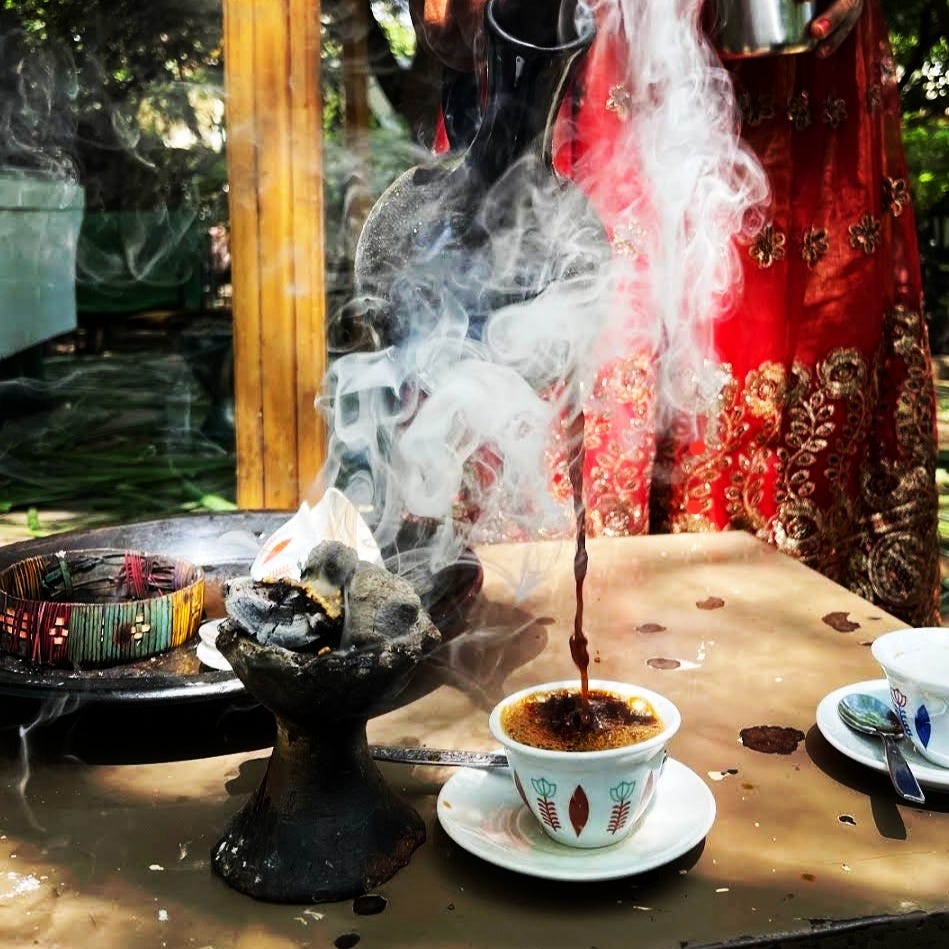
Chis(tis) (ጭስ)12 – Incense smoke burned during the ceremony to fragrance and purify the space.
“Buna Dersoal!”
When the coffee was ready, my mother would look at me and say, “Go call the neighbors. Buna dersoal.”13 Coffee is ready.
I would run outside and announce it proudly. The neighbors would drop whatever they were doing. Laundry could wait. Injera could wait. Conversations could pause. Because coffee must be drunk hot.
In Ethiopia, you never drink coffee cold. We even have a saying, “Buna ena fikir betekusu.” 14Coffee and love are best when they are hot. Coffee is alive when it is hot, just like affection and connection. It must be shared in the moment.
Three Times a Day, Not Once
If you think the coffee ceremony happens only once a day, you would be wrong. In my household, Buna was prepared three times a day: morning, afternoon, and evening.
Morning Buna woke the house. Afternoon Buna carried discussions, neighborhood updates, and sometimes a little gossip, or what I call information exchange between mothers. Evening Buna softened the day.
By the time parents slowly sipped the third round, Bereka, we children were already drifting to sleep. The scent of roasted coffee mixed with incense floating through the house felt like a lullaby. The day began and ended with Buna.
Abol, Tona, Bereka
The ceremony unfolds in three rounds.
Abol is the first and strongest, bold and awakening.
Tona is the second round, smoother and more relaxed, where conversations deepen.
Bereka is the final round, gentle and comforting, a blessing before parting. By this time, the coffee is usually lighter and watery.
Each round is not simply a refill. It is a continuation of connection.
Buna Qurs: Coffee Never Comes Alone
Coffee is never served alone. There is always Buna Qurs, the small bites shared alongside the cups.
Depending on the household or region, it could be popcorn, kolo which is roasted barley or grains, anebabero15, dabo qolo16, or dabo which is bread. Whatever you have and whatever your area offers becomes part of the ceremony. Hospitality is not about luxury. It is about sharing.
One of my favorites was Ye Nug Lit Lit17. Dark nigel seeds are roasted slowly until fragrant, then beaten until they become sticky. As their natural oils begin to release, they turn glossy and can be molded into small shapes. They are rich, slightly bitter, and deeply aromatic. Served with kolo or popcorn, they balance the bitterness of coffee beautifully.
It is healthy, simple, and deeply satisfying
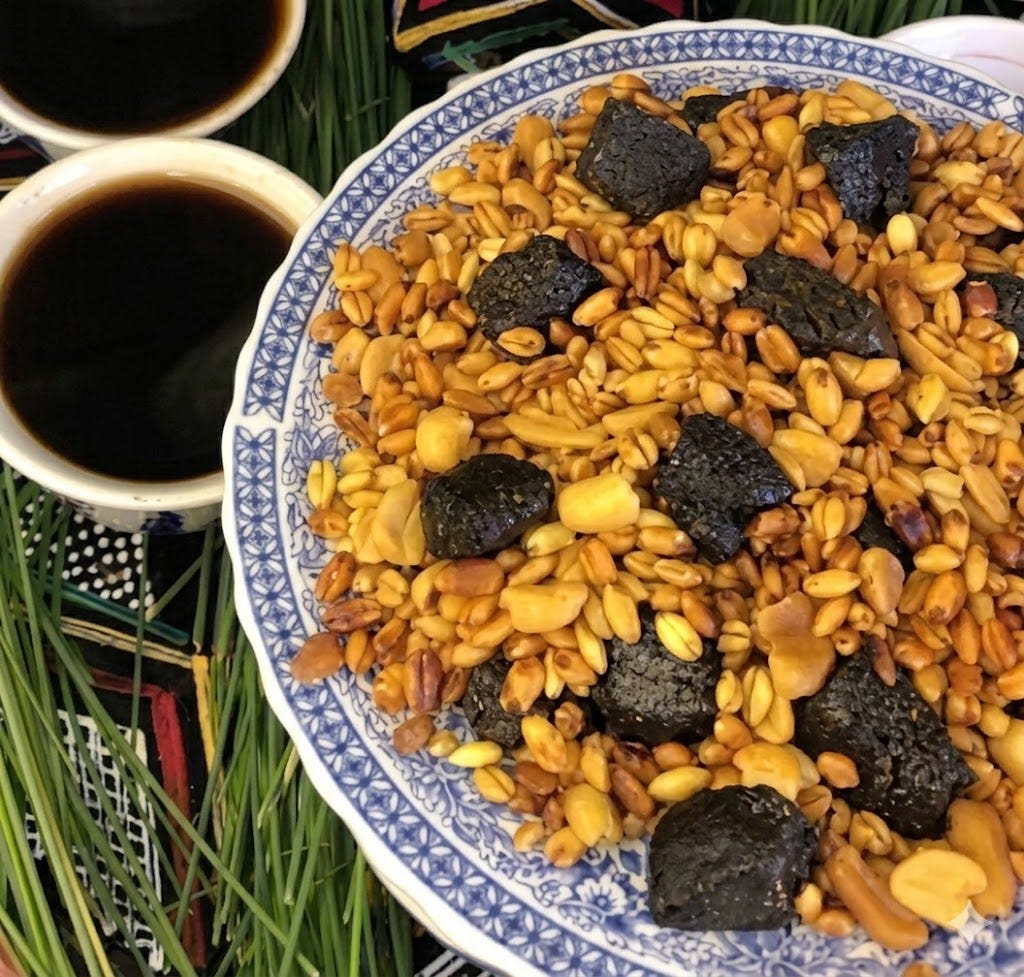
Qolo with nug lit lit : Roasted barley or mixed grains eaten as a snack with pressed nigel seed
More Than a Beverage
The Ethiopian coffee ceremony is not about caffeine. It is about patience, presence, hospitality, storytelling, laughter, disagreement and reconciliation, and even gossip that binds communities together.
It is where neighbors become family. Where advice is offered with or without invitation. Where family and friends confined in each other find solutions and reconcile sour relationships. Where silence is shared without discomfort.
Coffee is brewed slowly because relationships are built slowly.
The Heart of It All
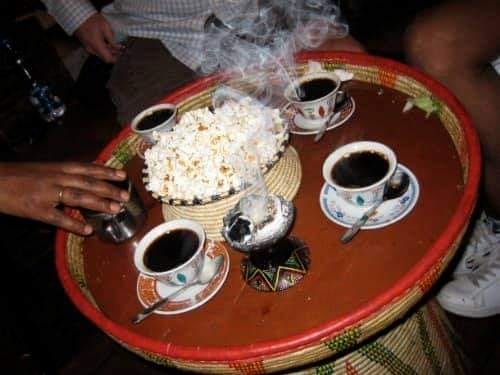
The Buna ceremony is not just a three-round coffee drinking session. It is the sound of beans shaking at dawn. It is running outside shouting “Buna dersoal.” It is neighbors walking in without knocking. It is fresh grass underfoot. It is incense rising slowly into the air. It is popcorn passed from hand to hand. It is parents sipping Bereka while children fall asleep.
It is Ethiopian life in motion!
And as we say, coffee and love are best when they are hot, and we are good at keeping them hot.🔥🔥

Thanks for sipping! ☕ Join Jebena Diaries for stories, flavors, and a pinch of surprise in every cup 😉
Biret Mitad (ብረት ምጣድ) – Literally “iron griddle.” A flat metal pan used for roasting or baking.
Muqecha (ሙቀጫ) – A traditional hand mortar used for grinding coffee or spices.
Zenezena (ዘነዘና) – The pestle used with the muqecha to crush roasted coffee beans.
Jebena (ጀበና) – A handmade clay coffee pot used to brew traditional Ethiopian coffee.
Sini (ስኒ) – Small handleless coffee cups used to serve buna.
Abol (አቦል) – The first and strongest round of coffee in the ceremony.
Qimem Shay (የቅመም ሻይ) – Spiced tea given to children or non coffee drinkers. “Qimem” means spice, and “Shay” means tea.
Buna Qurs (ቡና ቁርስ) – Literally “coffee snack.” Small bites served alongside coffee.
Tona (ቶና) – The second round of coffee, lighter and smoother than Abol.
Bereka (በረካ) – The third and final round of coffee. The word means “blessing.”
Buna (ቡና) – Coffee. In Ethiopia, the word refers both to the drink and the ceremony itself.
Chis (ጭስ) – Incense smoke burned during the ceremony to fragrance and purify the space.
“Buna Dersoal” (ቡና ደርሶአል) – “The coffee is ready.” A call inviting neighbors to join.
“Buna ena fikir betekusu” (ቡና እና ፍቅር በትኩሱ) – “Coffee and love are best when they are hot.”
Anebabero (አነባበሮ) – A traditional dry bread or crunchy snack served with coffee in some regions.
Dabo Qolo (ዳቦ ቆሎ) – Small crunchy pieces of baked bread, similar to bread bites.
Ye Nug Lit Lit (የኑግ ልትልት) – A traditional snack made from roasted and ground nigel seeds pressed until their oils are released and shaped into small portions. “Ye nug” means “of nigel seed.”