

Spris / Spriis / Espris (ስፕሪስ )
If you spend enough time in an Ethiopian café, sooner or later you will hear someone order a “Buna 1Shai 2Spris.”
The waiter nods. A glass appears.
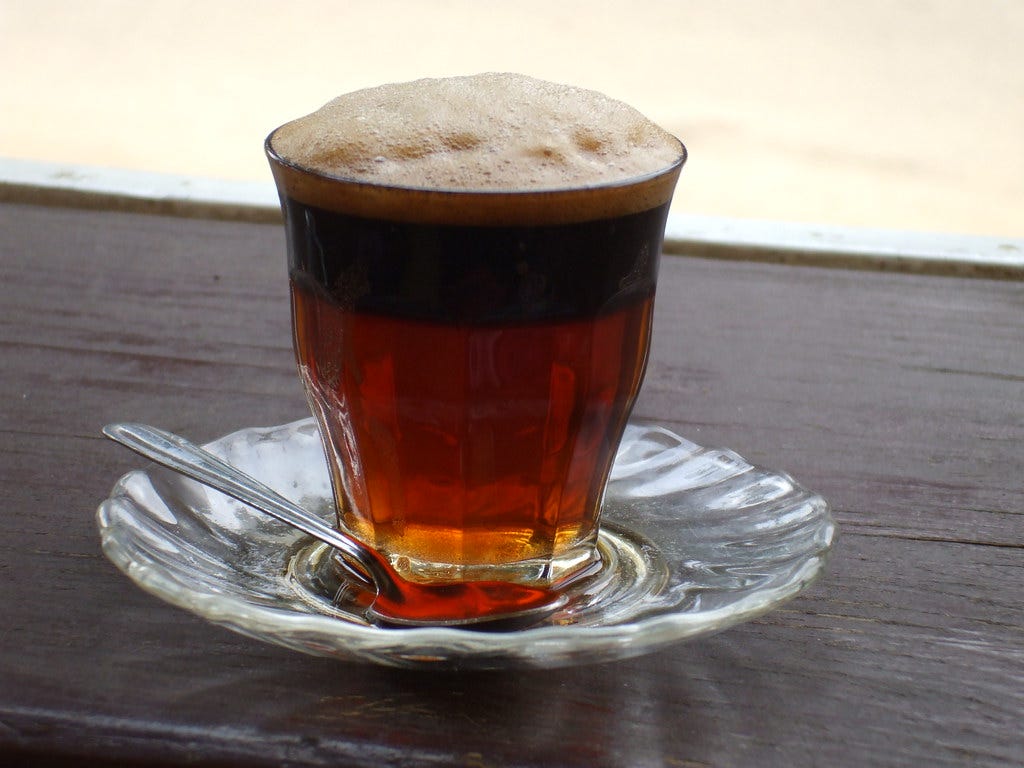
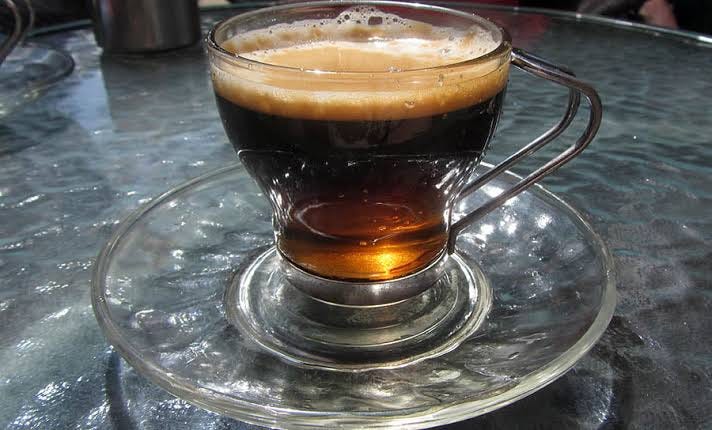
Half golden tea. Half dark coffee.
Two drinks. One glass. One very Ethiopian idea.
Spris 3may not be as famous as the traditional Ethiopian coffee ceremony, but in modern Ethiopian cafés it has become a small cultural icon. It is a drink that quietly reflects the country’s creativity, café culture, and love for both coffee and tea.
The Meaning Behind the Name
The word Spris (sometimes written Spriis or Espris) comes from the Amharic word meaning “mix” or “mixture.”
The name describes the drink perfectly. It is a blend of coffee (buna) and tea (shai) served together in the same glass.
Some historians believe the word may also have been influenced by the Italian word spruzzato, meaning splashed or mixed. This linguistic trace likely dates back to the Italian presence in Ethiopia in the mid twentieth century, a time that also helped introduce espresso machines and modern café culture to Addis Ababa.
Language travels with people. Sometimes it leaves behind a word. Sometimes it leaves behind a drink...😉
A Drink Born in Ethiopian Cafés
Unlike the traditional Ethiopian coffee ceremony, which takes place at home and unfolds slowly with roasting, grinding, and brewing, Spris belongs to the café.
But Ethiopian coffee ceremonies are not only found inside homes. They are also part of everyday street life. In many cities you will find women roasting coffee on small charcoal stoves along sidewalks and markets, serving fresh buna to passersby.
Spris, however, emerged from a different space. It grew with urban café culture.
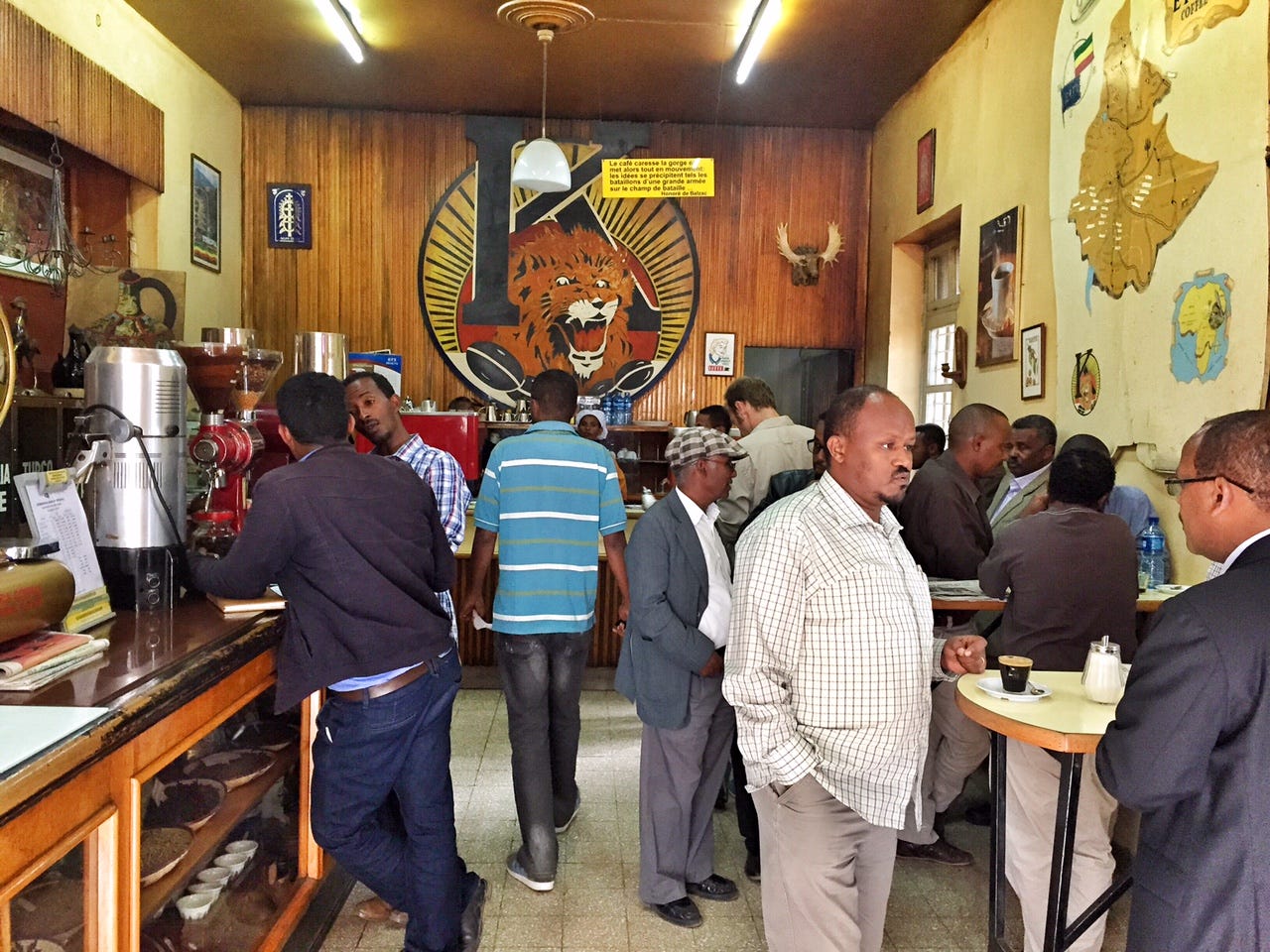
As café life expanded across Ethiopian cities, especially in Addis Ababa, cafés became places where people gathered for quick conversations, study sessions, or a short break during the day.
Spris appeared as a practical and creative café drink.
It combines the boldness of coffee with the lighter character of tea, creating something that sits comfortably between the two.
“Stories, surprises, and coffee that wakes your senses… Pass it on!”
How Spris Is Made
The preparation is simple but visually beautiful.
First, black tea is poured into a clear glass.
Then black coffee is slowly added on top.
If done carefully, the liquids separate into two layers.
Tea resting at the bottom.
Coffee floating above it.
The result is striking. Golden tea below and deep brown coffee above.
Most cafés serve it sweet, often with a generous spoon of sugar that softens the bitterness of coffee and the tannins of tea. Milk is rarely added.
Some people stir it before drinking. Others prefer to sip it slowly and let the flavors blend naturally.
A Student’s Secret Weapon
For many Ethiopians, Spris is more than a café drink. It is also a student survival tool.
For me, it always brings back memories of university dorm life.
During exam season, when long nights turned into early mornings, Spris became our favorite waking agent. When the textbooks started to blur and sleep tried to win, we knew exactly where to go.
At Addis Ababa University there was a small student café behind Kennedy Library that stayed open late. Sometimes until four in the morning.
We would walk there half asleep, order a glass of Spris, and hold the warm glass while the caffeine slowly did its work.
Then we would head straight back to the library. Kennedy, the postgraduate reading rooms, or any study space that stayed open late.
And trust me, it rarely fails.
One glass of Spris and suddenly the night does not seem so long.
The Drink of Readers and Café Thinkers
Spris also has another home in Addis Ababa’s café culture.
Around the Mexico area and near the National Theatre, it is common to see people sitting in cafés with a book in one hand and a glass of Spris on the table.
Readers, students, and writers often gather in these cafés, moving between pages and slow sips of coffee and tea mixed together.
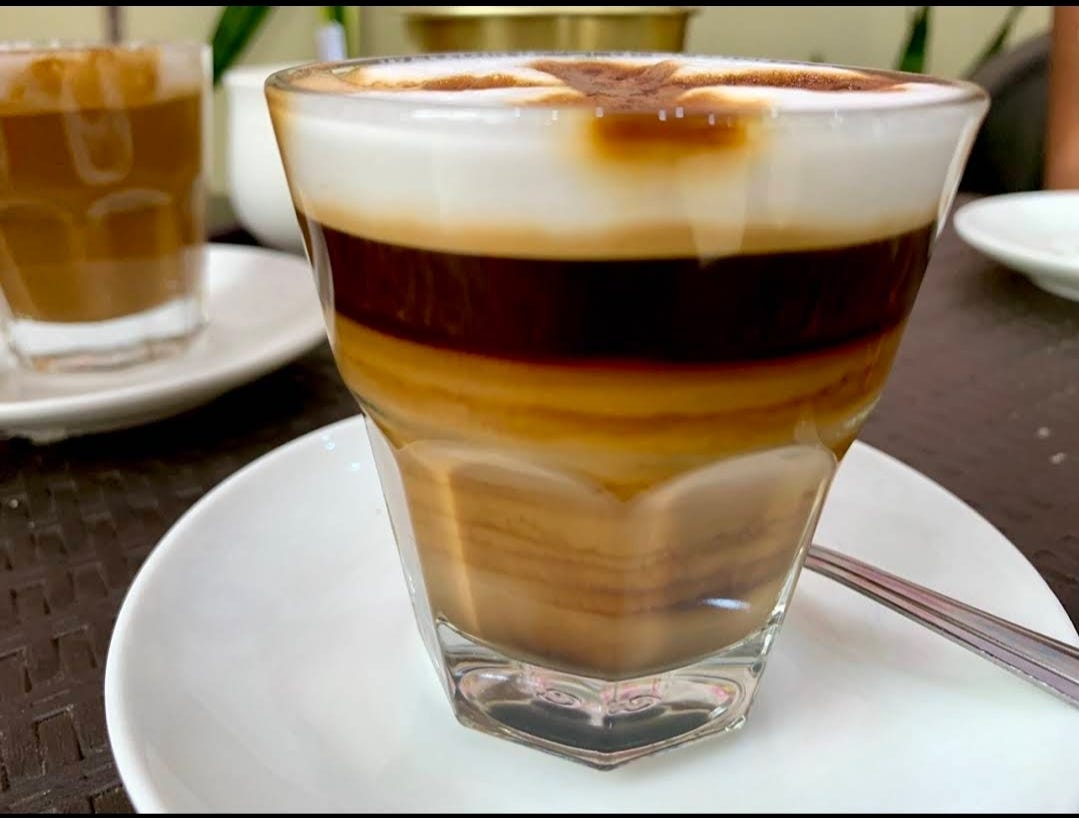
Alongside the famous Ethiopian macchiato, Spris has quietly become one of the drinks that accompanies long conversations, reading sessions, and slow afternoons in the city.
But the story of Ethiopian macchiato is fascinating on its own. That is a story for another day.
Ethiopia’s Other Underrated Drink
One thing that often gets overlooked is Ethiopian tea.
While the world celebrates Ethiopian coffee, and rightly so, the tea grown in Ethiopia is also remarkably good. It is smooth, aromatic, and often enjoyed with spices. It has its own quiet place in everyday life.
Now imagine combining premium Ethiopian coffee with quality Ethiopian tea in the same glass.
That is Spris.
Two beautiful drinks, each strong in its own way, meeting in the middle.
A Small Glass That Carries Memories
Some drinks wake you up. Spris keeps the night going.
For many of us it carries memories of student life, late night studying, quiet cafés, and the soft hum of university campuses when most of the world is asleep.
A glass of tea and coffee layered together may seem simple, but in Ethiopia it represents something deeper. The creativity of café culture and the everyday rituals that shape our lives.
Somewhere tonight, in a university café or a small pastry shop, a student is probably holding a warm glass of Spris, preparing for another long night with books and notes spread across a table.
In Ethiopia, when we invite someone out, we often say “Shai buna?”4
Tea or coffee?
And somehow, with Spris, we found a simple answer.
Why not both?
“If Spris is Ethiopia’s creative café drink, macchiato is its proud espresso child.”

Thanks for sipping! ☕ Join Jebena Diaries for stories, flavors, and a pinch of surprise in every cup 😉
Buna (ቡና) – The Amharic word for coffee
Shai (ሻይ) – The Amharic word for tea.
Spris / Spriis / Espris (ስፕሪስ ) – From Amharic, meaning “mix” or “mixture.”
Shai buna? (ሻይ ቡና?) – A common Ethiopian invitation meaning “Tea or coffee?” Used to invite someone to share a drink.