

46 km of anticipation before coffee’s whispered history
Once upon a cherry… No, seriously. Somewhere in Ethiopia, a goat snacked, humans noticed, and suddenly the world couldn’t get enough. Welcome to where it all began (or almost). On the bumpy road from Jimma toward Bedele, about 46 km in, you’ll find Choche, a quiet place that reminds us that coffee may not have a single birthplace, but it leaves footprints. Follow them, and you’ll find stories, trees, and maybe a curious goat or two.
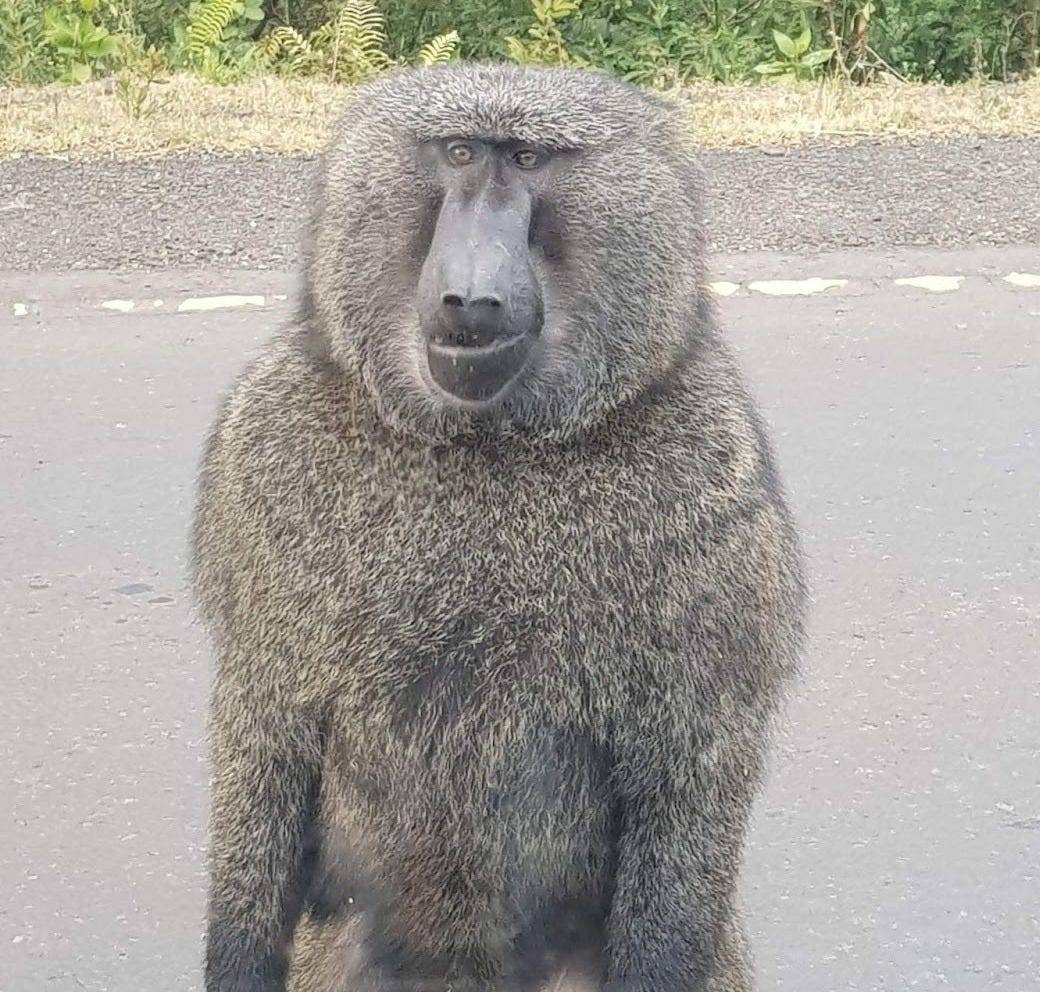
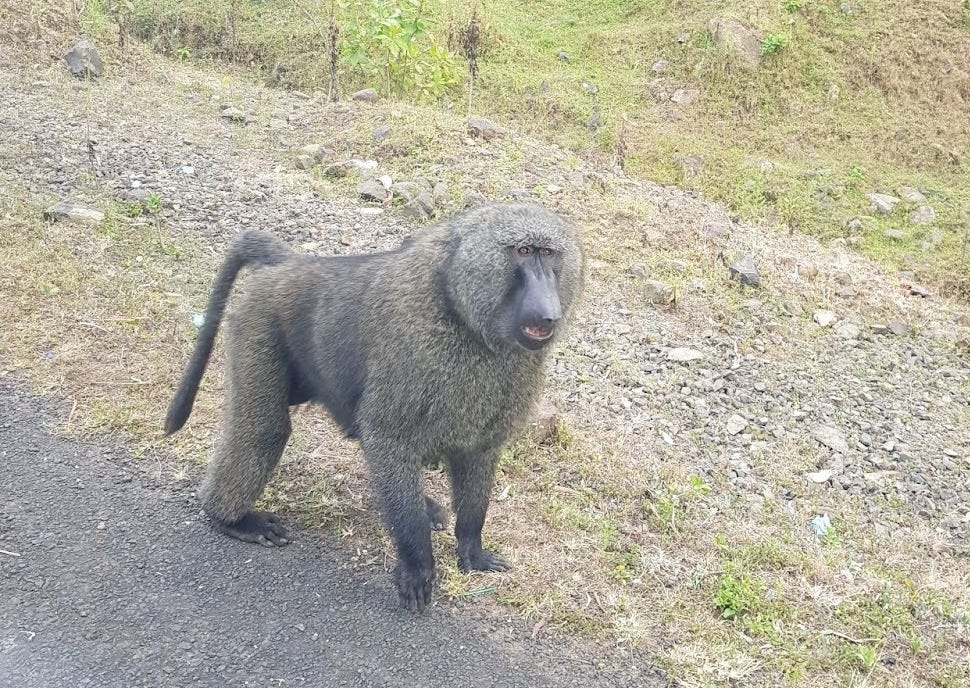
The journey isn’t just about the destination. Along the way, monkeys appear along the roadside, peeking curiously and occasionally asking for snacks. They seem to know that something magical is coming, the forests ahead, the coffee waiting, and maybe a few stories they can keep for themselves.
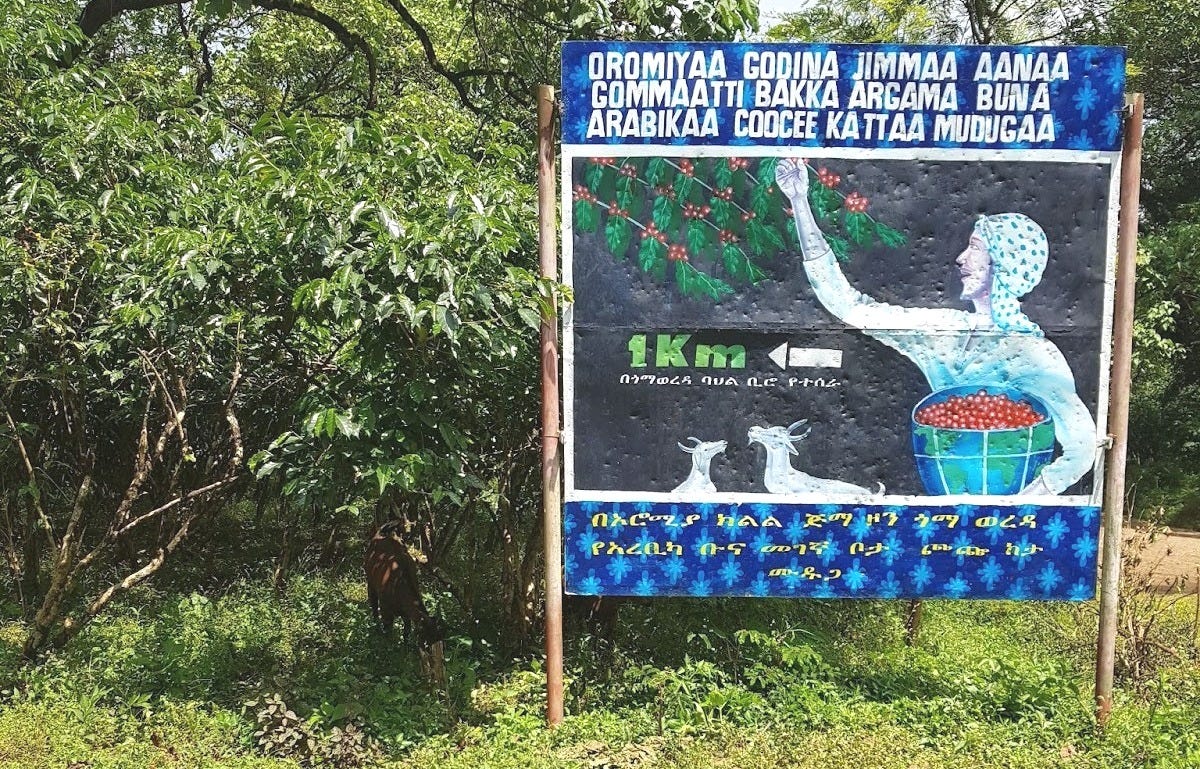
Arriving in Choche, Goma Woreda, Jimma Zone, a simple billboard quietly points the way. From there, you walk about one kilometer through farmland and into the forest, where coffee doesn’t grow in neat rows but exists the way it always has, wild, shaded, and patient.
In the Choche forest, the trees are densely shaded, and forest coffee grows quietly below. Monkeys sit on the branches above, looking down at passersby as if judging who is worthy of tasting these ancient beans.
Here, there is a simple monument that locals say marks Kaldi’s footprint. Nothing grand. Nothing dramatic. It is simply present in the way old things often are. Built from concrete, it is partly swallowed by long, untended grass and plants that have grown freely around it. Nearby stands a small room meant to serve as a museum. Each time I visited, it was locked, offering no glimpse of what might be inside.
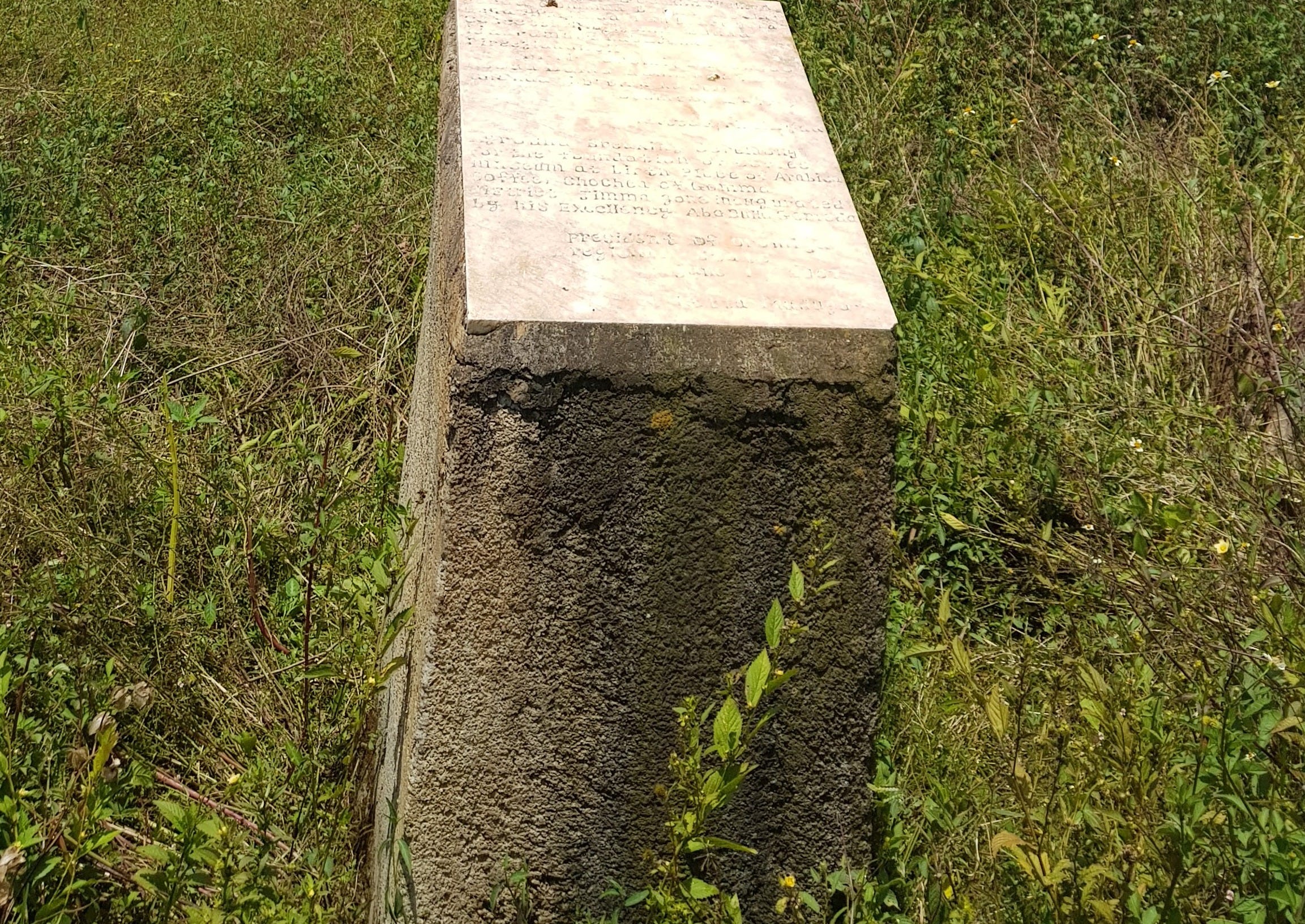
The modest monument in Choche Forest believed to mark Kaldi’s footprint, where wild coffee still grows under dense shade.
The elderly sheikh who watches over the place is kind and generous with his time. He speaks with a warm smile as he explains the story of coffee, the seasons, and other local tales passed down through generations. His words feel less like instruction and more like memory.
For the locals, Choche is traditionally associated with the legend of Kaldi or Khalid, as some elders still call him, the 9th-century goatherd who noticed his animals growing unusually lively after chewing the red berries of a wild bush. Frisky. Dancing, even. According to the tale, this was the moment humans first recognized the stimulating power of coffee. A story repeated so often it has settled into the landscape itself.
Nearby, a dark brown goat lingers, easy to miss at first, blending into the earth and brush, almost as if keeping watch over the forest that once fed its kind. No signs. No spectacle. Just land that seems to remember.
The road leaves Choche behind, tiptoeing into Kaffa, where the beans have paperwork to prove their age.
Not far from Jimma lies Bonga, the name that echoes louder in history books and coffee conversations alike. The capital of Keffa, wrapped in dense forests, Bonga is often called the ancient heart of Arabica, a place where coffee didn’t need to be planted because it simply grew. Its story is older, broader, and more widely told, shaped by forest canopies and generations who lived alongside coffee rather than above it.
Many scholars and coffee lovers believe that the word “coffee” or “café” in French may actually derive from Keffa, or at least its long association with the bean that conquered the world. So when you sip your espresso, your cappuccino, or your jebena-brewed cup, you’re holding a little piece of history from Bonga’s forests. If Bonga feels like the library of coffee’s past, then Choche feels like a handwritten note tucked between the pages, personal, local, and easily missed.
At Jimma University, Kaldi’s sculpture stands proudly, a playful nod to a legend that still lives in the forests and farms nearby.
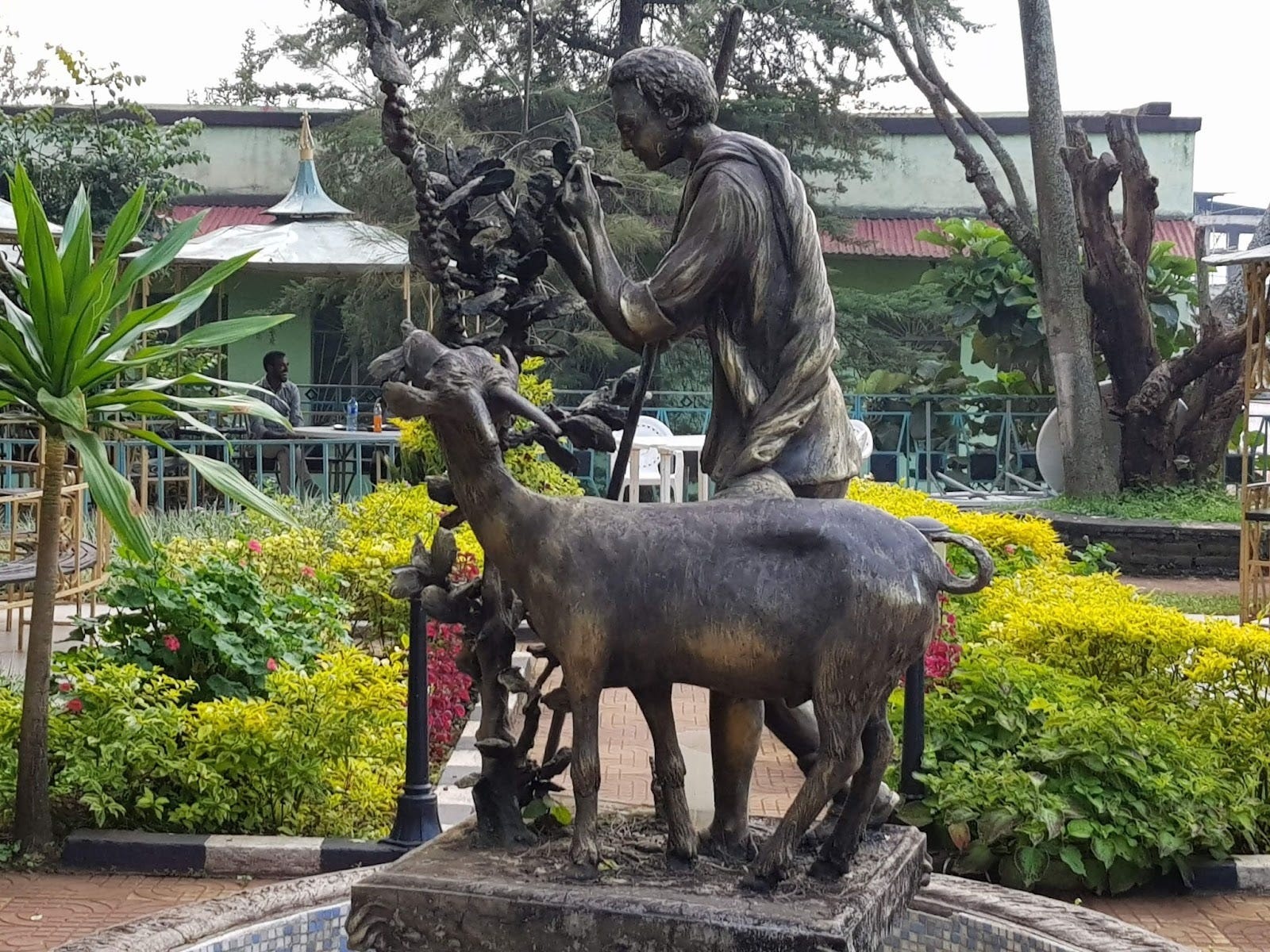
Kaldi keeps watch in bronze form, reminding us of the legend that started it all.
Legends, footprints, and curious goats, if you find them all, congratulations, you’re officially caffeinated in history. Until the next cup, keep following the stories, the forests, and the beans that travel through them. Letenachin!
¹ Letenachin is an Amharic word meaning “cheers,” commonly used in Ethiopia when toasting with coffee or drinks.
