

Most people credit the roaster for what they taste in the cup.
But the story actually begins much earlier than that.
You picked up a coffee bag. Maybe at a specialty coffee shop, maybe online. And right there on the label, squeezed between the farm name and the tasting notes, you saw it.
Washed process…Natural process.
And you thought… okay, cool. But what does that actually mean?
Here is the thing most people never hear. The flavor of your coffee is not born at the roastery. It starts much earlier, in a moment most people never see. Long before anyone touches a roaster, the way the coffee fruit is handled after harvest already decides what is waiting for you in the cup.
Because coffee is a fruit first.
Inside every coffee cherry, that small ripe red fruit, are two seeds. Those seeds are what we roast and grind. Processing is simply the method used to remove the fruit from those seeds. And in Ethiopia, that one decision shapes everything.
Washed process is all about clarity, speed, and precision.
The moment cherries arrive at the washing station, the outer skin is removed by machine, usually within 12 hours of harvest. The beans still carry a sticky layer called mucilage, so they move into fermentation tanks. There, they ferment in water for 24 to 72 hours. At higher altitudes, everything slows down, and that slow rhythm often shows up later in the cup. After fermentation, the beans are washed clean, moved to raised African beds, drying slowly under the sun. 12 to 18 days. Weather decides the rest..
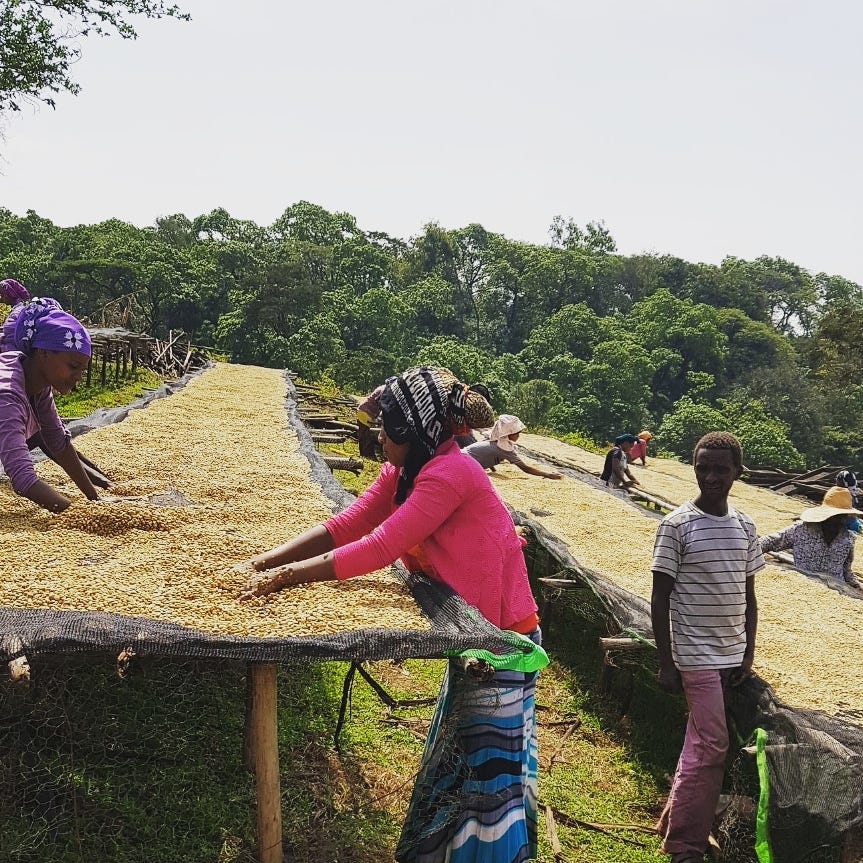
Washed clean, moved to raised African beds, drying slowly under the sun. 12 to 18 days.
One important thing people do not always realize is that washed processing is much more resource intensive than natural processing. It requires large amounts of clean water, significant labor, and proper infrastructure to manage fermentation, washing, and especially wastewater after processing. Because of this, it is usually done at centralized washing stations rather than at individual farms.
What you get in the cup is clean, bright, and elegant. A cup that feels light, structured, and incredibly expressive.
About 30 percent of Ethiopian coffee is prepared this way.
Then there is Natural process, and this one feels like a completely different story.
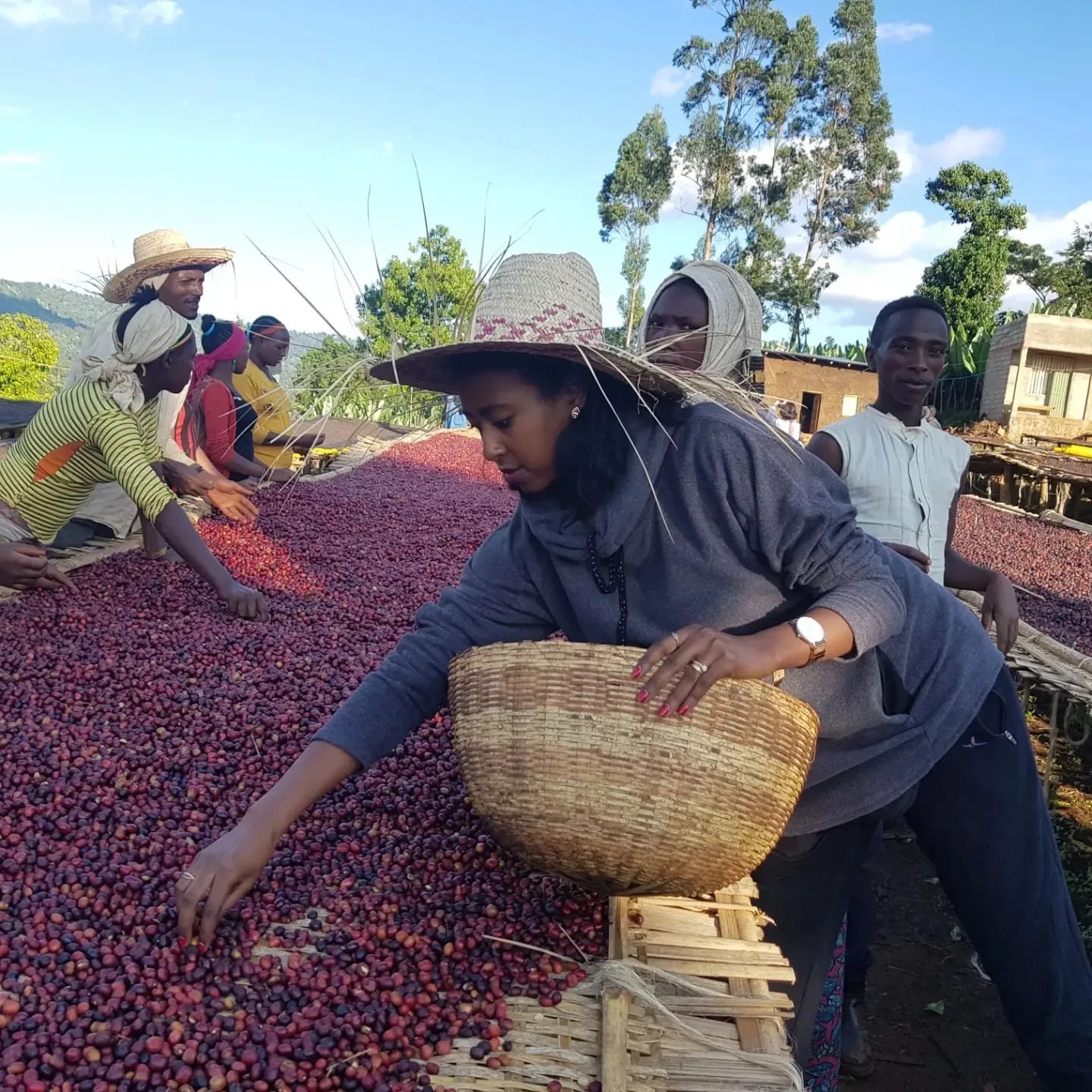
No machines at the beginning. No quick separation. The entire cherry goes straight onto raised drying beds whole. Skin, fruit, seed, everything together. And there it stays for 18 to 25 days under the Ethiopian sun.
During that time, the cherries are turned by hand, checked constantly, protected from sudden rain, and watched with patience. One unexpected storm can damage an entire lot. It is slow work. Careful work. Very human work.
Natural process is one of the oldest and most traditional methods in Ethiopia. Around 70 percent of coffee is still prepared this way. What was once considered a simpler method is now respected at the highest level in specialty coffee, especially when carefully managed on raised beds.
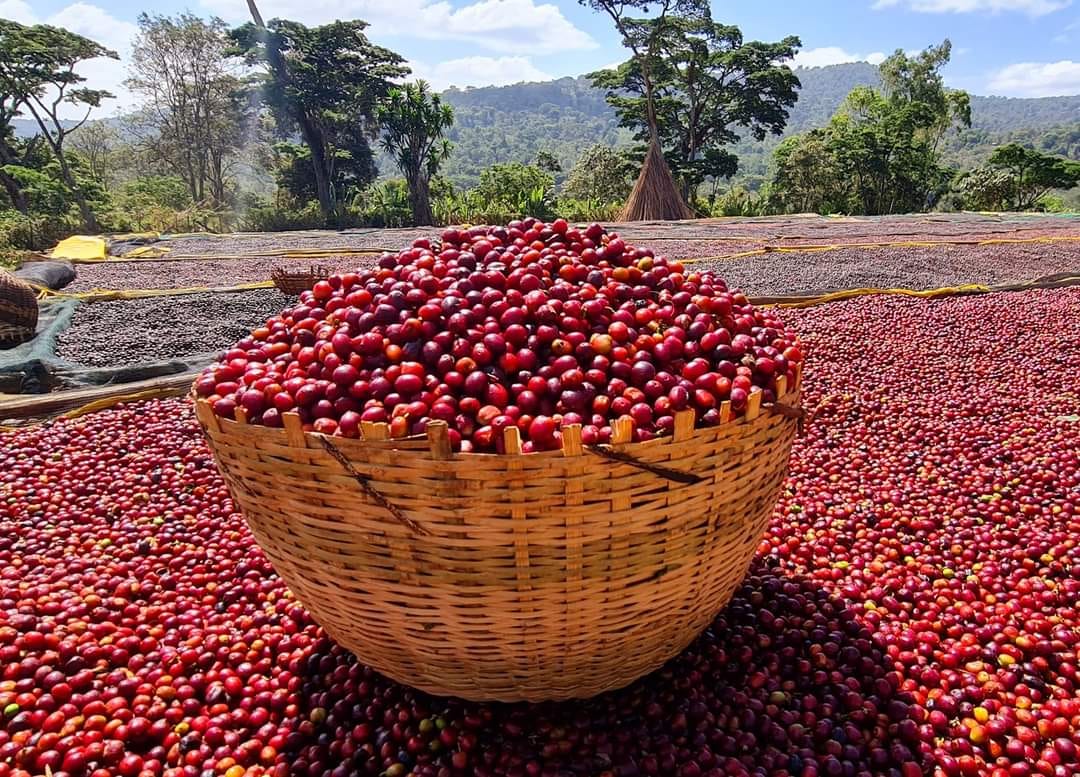
“Isn’t she lovely, isn’t she wonderful…”…🎶🎶 just a cherry before chaos (roasting).
When the cherry is finally dry, it goes to a hulling station. What comes out carries everything it absorbed from the fruit over those weeks.
Blueberry. Strawberry. Tropical fruit. Dark chocolate. A heavy, wine-like body that feels almost like it belongs to a different coffee altogether.
“Know someone who needs this? Forward it. You would be doing them a favor.”😉
Then there is Honey process. The quiet in-between.
No, there is no actual honey involved. We know. Honestly though, have you tasted it? No complaints.😍
The skin is removed like washed coffee, but the sticky mucilage is left on while drying. Not fully washed, not fully natural. Something in the middle. Sweeter than washed, cleaner than natural. Stone fruit, caramel, balance. Still relatively rare in Ethiopia, mostly experimental lots in places like Yirgacheffe and Guji.
And the truth is simple.
None of these processes is better than the other. They are just different ways the same coffee cherry tells its story.
Washed feels like a quiet morning. Clear light. Clean cup. Everything in place.
Natural feels like celebration. Loud, juicy, a little wild, unforgettable.
And the most beautiful part is this. Both started as the same small red cherry, picked by hand, under the exact same Ethiopian sky.
Oh and that washing station we kept mentioning?
Some of you already know. Good for you. The rest of you have been nodding along pretending you did. No judgment. 😉Next week, we are going inside.
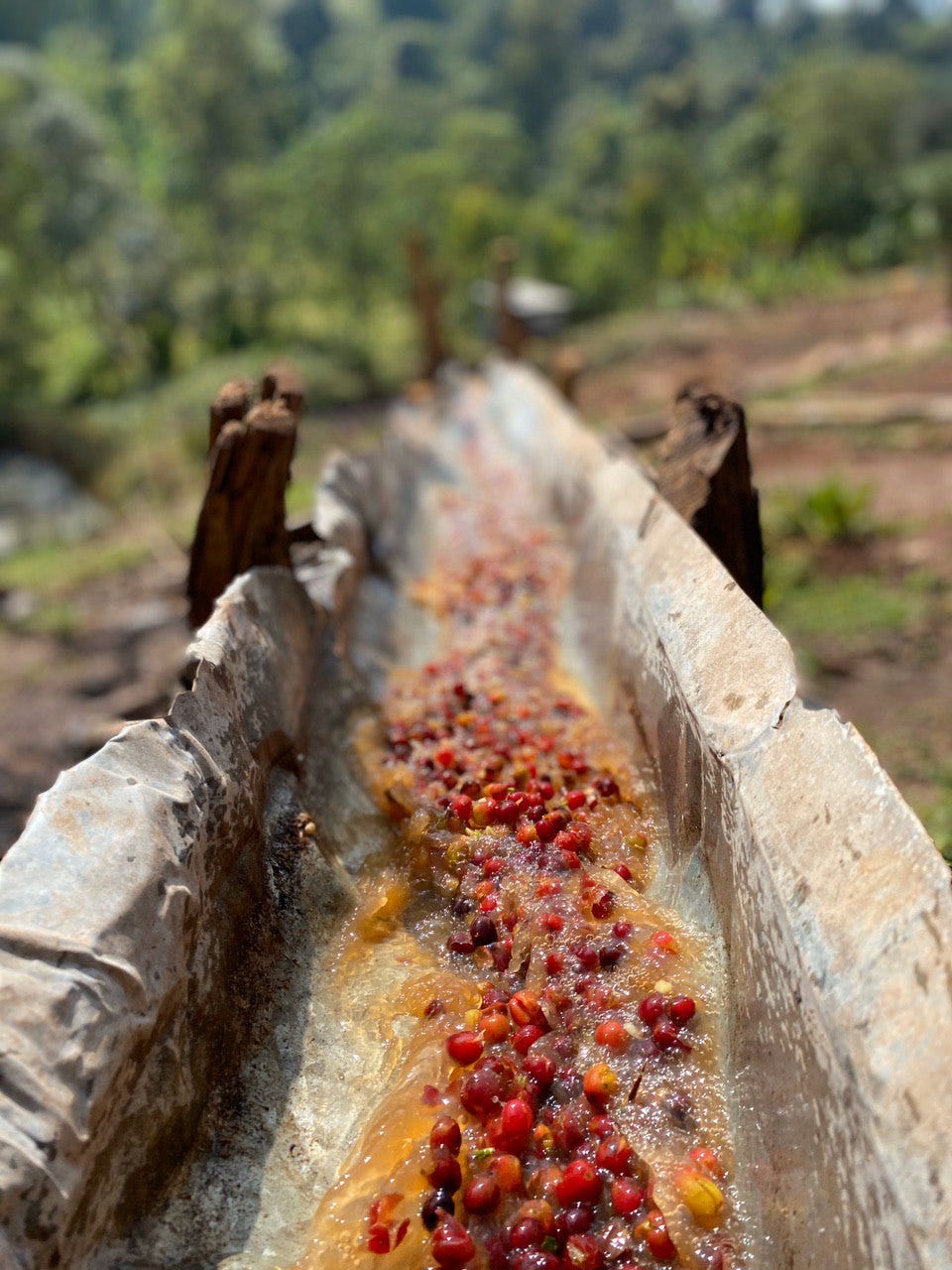

Thanks for sipping! ☕ Join Jebena Diaries for stories, flavors, and a pinch of surprise in every cup 😉